Entities in Local SEO: Your Ultimate Guide to Local Ranking Success

Entities are like tags that help search engines, such as Google, understand your local business.
They are things or concepts—like a person, place, or idea – that Google uses to give relevant search results.
Want to learn more? Read on!
Key Takeaways
- Entities in SEO are core topics that define your content. They can be people, places, things, or even ideas.
- Entity SEO helps Google understand the context of your local business.
- Optimising for entities boosts your local SEO ranking.
- Use structured data like schema markup and tools like TextRazor to boost your SEO efforts.
What are Entities in Local SEO?
Definition and Core Concepts of Entity SEO
An entity in SEO is a clear bit of info, like a person, place, thing, or idea. Think of it like a label. Search engines use these labels to understand what your content is about.
Is it about a famous landmark like the London Eye? Is it about a business like Starbucks? These are all examples of entities.
Each entity in SEO is well-defined and distinguishable, making it easy for search engines to spot them within your online copy.
How Google Defines SEO Entities
Google says an entity is a “thing or concept” that’s special and easy to spot. Entities include all sorts of information, even things like colours or imaginary creatures! Google sees these entities as the building blocks of information online.
Types of Local SEO Entities
There are many different entities, from big to small! Some types of entities related to local businesses are:
- Geographic Entities: Think of your town, like West Los Angeles, or even the street your business sits on!.
- Business-Related Entities: This is your business name and the services you provide, like chiropractor or back pain treatment.
- Industry-Specific Entities: These are words related to your business type. Sciatica or injury are good entities for a chiropractor.
- Community and Event Entities: Do you take part in the local fest? That’s an entity! These entities can all play a role in how Google sees your online presence as a local business.
The Role of Knowledge Graphs
Google keeps all these entities in a big web called the Knowledge Graph. It’s how Google connects the dots. So, if someone searches for “chiropractor near me”, Google uses its Knowledge Graph to find the best SEO match for local chiropractors.

This focus on entities has changed how Google finds and shows search results. Since voice search is growing, people now make longer search queries.
This creates more entities within a sentence, helping Google work out exactly what the user needs, with no need for long lists of multiple pages.
How Entities Improve Local Search Rankings
Understanding Entity-Based vs Keyword-Based SEO
Think of keywords like “chiropractor West Los Angeles”. It’s what people type into Google.
Entities are ranked according to their prominence. Traditional SEO focused on these keywords. Entity-based SEO is focused on the things within the keywords, like “chiropractor” and “West Los Angeles“.
These entities contained within the search help Google spot the search intent. Why are you’re optimising for entities? Simply put, Google’s become amazing at matching keywords to entities!
Connection Between Entities and Search Intent
Google needs more info from sites to answer the more complicated questions that voice search creates. How? By using entities.
Search engines, Google’s included, then look at how many of the entities associated with the search are on a page. Entities can include local landmarks, street names such as West Los Angeles, and even local nicknames.
Impact on Local Search Visibility
Using relevant entities in your content and the right schema markup makes your business info clear to Google’s brain. This can boost your local search visibility and get you higher search engine ranking!
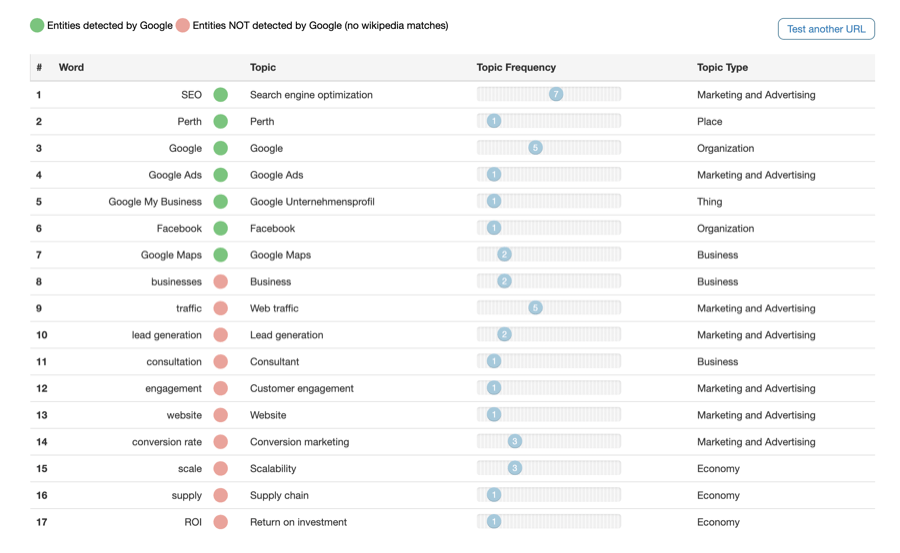
So you need to add related entities or multiple entities to your content wherever possible. Entities create relevant search results much more than any local keyword research. When optimising for entities, you’re preparing for the future of entities in local SEO.
Building Local Relevance Through Entities
When Google’s bot crawls your website, it checks data from all over the web such as your Google My Business profile. It checks what people say. It checks for awards. It checks your local SEO.
All this online buzz helps Google rank you, especially as a local business. Want more people to see you?
Work on getting relevant entities, your key entities across as wide an online presence as possible and as much organic traffic as possible, not simply aiming for the best SEO but also the most visibility as a local business.
Essential Local SEO Entities
- Geographic Entities: These are places. Think London Eye or even just your address!. Local landmarks can be very helpful!
- Business-Related Entities: What do you sell? Chiropractor? Back pain help? These are key!
- Industry-Specific Entities: Say you fix injuries. That’s an industry-specific entity!
- Community and Event Entities: Do you go to local events? These can be entities too and really boost your local relevance. Using the right entities here shows you understand how Google ranks entities, a key aspect of modern SEO.
Finding and Mapping Local Entities
Tools for Entity Detection
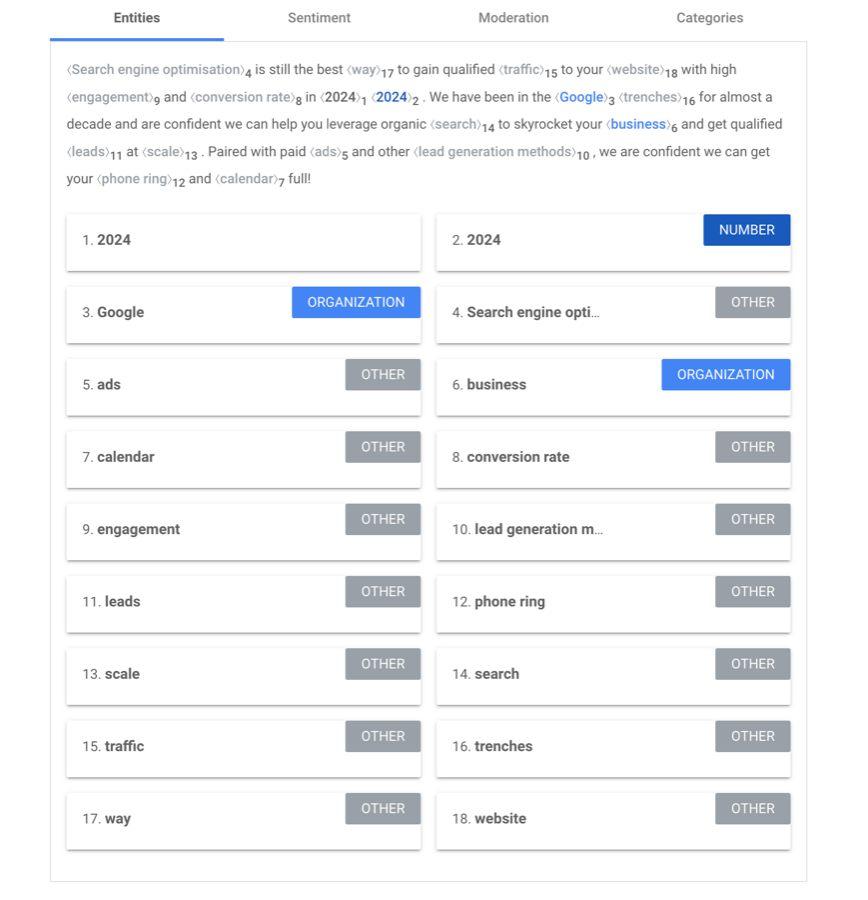
Use cool tools like Google’s NLP API or TextRazor. There are loads out there that can find your key local terms, your relevant entities!
Entity Research Process
- Look for distinct entities used by your local SEO ranking factors competitors.
- Check what entities link to your top rivals using technical SEO tools.
- See what words pop up in Google when you check your main keywords.
Competitor Entity Analysis
See what entities your rivals use. Are they using words like pain? Or injury? These are all clues!
Creating Entity Maps for Local Businesses
Map your entities to other pages with relevant anchor text using on-page SEO methods. Link “chiropractor” to your about us page. This helps Google see what matters most and is how entities improve local.
Implementing Entity Optimisation
Content Creation with Local Entities Make entity-rich content. Write about local spots, like the top 10 things to see near you.
When across the web, aim to create lots of citations and digital references, such as on blog comments, wiki pages and social media pages. These are essential local SEO tactics.
Internal Linking Strategy
Use the right words to link to other pages on your site. This is called internal anchoring with relevant keywords and helps Google see which pages are about which topics.
Your internal linking strategy is a hidden ranking factor to help search engines understand you.
Anchor Text Optimisation
Use your keywords in links. Link “back pain” to your services page. This tells Google what’s important. It is core on-page SEO.
Entity-Rich Landing Pages
Make pages about key entities like “sciatica treatment”. This shows Google you know your stuff! And when it comes to SEO, it really makes you stand out!

Schema Markup and Structured Data
LocalBusiness Schema Implementation
Use LocalBusiness schema on your site. It tells Google your opening times, address, and more! Your local business simply must have it. It is how you really optimise your online presence.
Place Schema Usage
If you talk about places, use Place schema. It helps Google link your business to that spot.
Event Schema Benefits
Going to a local event? Use Event schema. Google loves this!
Entity Relationships in Schema
Show Google how entities and their relationship is key to your offering. If you treat back pain, link that to chiropractor and Los Angeles in your schema.
Building Entity Authority
Citations and Digital References
Get listed on sites like Yelp as much as possible. These are your important online mentions!

Local Press and Media Coverage
Get in the local news! This shows Google you’re a big deal! It’s especially important to focus on offline businesses for maximum local relevance.
Community Involvement
Join local groups. Sponsor the school fete! Google sees this, building your local relevance.
Awards and Recognition
Did you win a best chiropractor prize? Shout about it! These are all entities!
Entity-Based Content Strategy
Creating Entity-Rich Blog Posts
Write blog posts with different entities, and aim for interlinking across your pages wherever you see a match.

Local Landing Pages
Make pages for each area you work in, such as your West Los Angeles treatment page. These are vital local seo-ranking factors.
Service Area Pages
List all the areas you work in, with links, showing Google just how local you really are!. These are excellent seo tactics for any local business.
About Us and Team Pages
Tell Google who you are! Even the owner’s name, Stephen Becker, can be an entity. The importance of entities cannot be overstated and you can be certain that SEO experts are using every possible advantage within this seo space.
Advanced Entity Optimisation Tips
Multi-Location Businesses
Have different websites for various locations? Make local pages for each one!
Service Area Businesses
List all areas or suburbs your business services, like “chiropractor Subiaco” with links!
Industry-Specific Strategies
Advanced SEO dictates that, depending on the niche, the nature, the area you operate within and the type of custom in question, there may be relevant entities to your area such as prizes an entity has received or the local nicknames.
Understanding entities in this way can be really advantageous and there are lots of ways that industry specific entities can really boost your ranking success.
A good first step and a highly recommended one is having an SEO Agency create, refine and further develop your overall SEO strategies, but it would be worth your while investigating.
Future of Entities in Local SEO
Entities are key to modern SEO but are nothing more than keyword reasearch 2.0.
Keep up, or get left behind! And whilst your keywords still remain essential parts of any online campaign, don’t forget that many keywords are specific or made up of long tail keyword sentences that entities are ranked against.
Remember to aim for a mix of both in order to fully optimise for your target audience. SEO and content marketing go hand-in-hand and require a deep understanding of entities.
Optimising for entities today will help you win tomorrow!, that’s the simplest way of conceptualising it.
Conclusion
Entities in local SEO are key to ranking well.
Use structured data, build local links with relevant anchor text, and get your name out in the community to help Google understand and better understand your thing or concept as an entity!
Optimise on-page and off-page using proven SEO strategies. Remember SEO goes beyond just keywords and if you focus on entities, you are setting yourself up for long-term success. Your SEO ranking can only increase!

Dorian Menard
https://staging.searchscope.com.auI’m Dorian, founder of Search Scope and an SEO obsessed with ROI and lead generation. After a decade in the trenches, I’ve built and ranked digital assets for businesses across the world. I cut through the noise with data, automation, and strategies that actually convert. When I’m not scaling rankings, you’ll find me on a motorbike or setting chess traps — always planning three moves ahead.