Steps to Recover from Local Search Penalties

Local search penalties can drastically reduce your business’s visibility in Google Maps and local search results. These penalties are usually caused by issues like fake reviews, keyword stuffing, or spammy backlinks.
Fixing them requires identifying the problem, addressing the root cause, and ensuring long-term compliance with Google’s guidelines.
Key Recovery Steps:
- Identify the Penalty Source:
- Check Google Search Console for manual penalties.
- Use tools like Google Analytics and SEMrush to spot algorithmic penalties.
- Audit your Google Business Profile for accuracy and compliance.
- Fix the Issues:
- Disavow harmful backlinks and rewrite problematic content.
- Correct Google My Business (GMB) details like NAP (Name, Address, Phone).
- Improve technical SEO (site speed, mobile usability).
- Submit a Reconsideration Request (for manual penalties):
- Document your fixes and submit them via Google Search Console.
- Include proof of corrections and a plan to prevent future violations.
- Prevent Future Penalties:
- Conduct regular SEO audits (technical, content, backlinks, GMB).
- Follow ethical SEO practices and maintain NAP consistency.
- Respond to reviews and keep business details updated.
Quick Comparison Table:
| Step | Action | Timeline |
|---|---|---|
| Identify Penalty Source | Use tools like Search Console and Analytics | 1-2 weeks |
| Fix Issues | Correct violations (e.g., links, content) | 2-4 weeks |
| Submit Reconsideration | Provide evidence of fixes | 2-3 weeks |
| Prevent Future Issues | Regular audits and updates | Continuous |
Recovering from penalties might take weeks or months depending on the severity, but addressing issues promptly and maintaining best practices ensures long-term success.
SEO Recovery – Recover From Any Google Penalty
Step 1: Identify the Penalty Source
The first step to recovering from local search penalties is figuring out what’s causing the issue. This involves using specific tools and methods to pinpoint the problem.
Check Google Search Console for Manual Actions
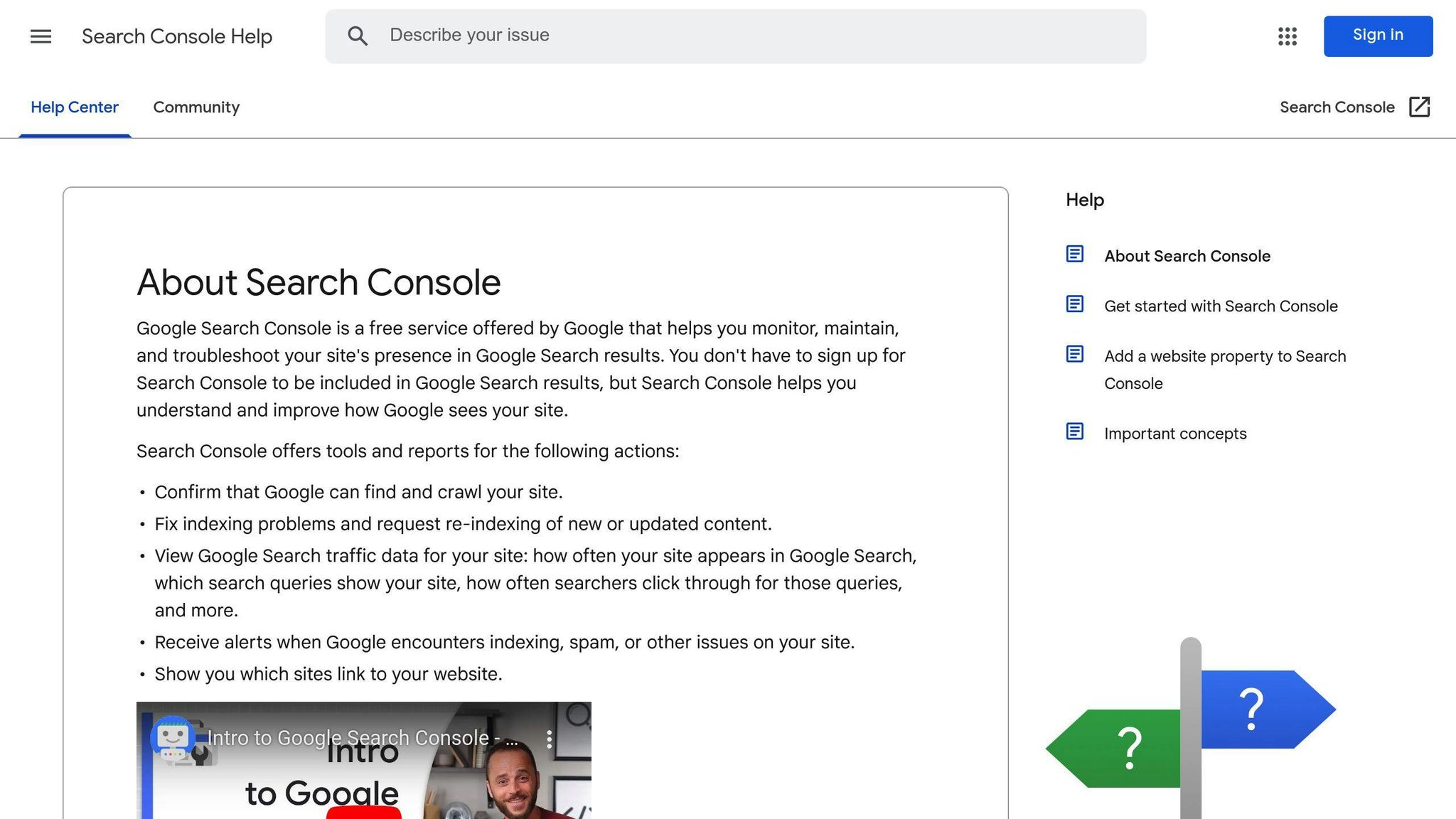
Manual penalties are issued directly by Google’s team. To check for these in Google Search Console, navigate to ‘Security & Manual Actions’ > ‘Manual Actions’.
If a penalty exists, you’ll see the violation type and the affected URLs. These issues need immediate attention, and recovery usually takes 10–30 days after Google’s review.
Spot Algorithmic Penalty Clues
Algorithmic penalties are trickier since Google doesn’t notify you directly. Here’s what to investigate:
| Indicator | What to Look For | Tools to Use |
|---|---|---|
| Traffic Patterns | Sudden drops in visitor numbers | Google Analytics |
| Ranking Changes | Significant position losses | Search Console Performance |
| Visibility Issues | Lower keyword rankings | SEMrush, Ahrefs |
| Timeline Analysis | Match drops with algorithm updates | Algorithm Update History |
If you suspect an algorithmic penalty, a full SEO audit is a must. Recovery can take over six months, so identifying the issue quickly is key.
Check Your Google My Business Profile
Your Google My Business profile can also cause visibility issues. Make sure to:
- Keep your Name, Address, and Phone (NAP) details consistent across all platforms.
- Remove any spammy or misleading photos, posts, or reviews.
- Choose the correct business categories that align with your services.
- Verify that your business hours, website URL, and service area are accurate.
SEO professionals can help with audits and recovery strategies if needed.
"Manual penalties can take about 10 to 30 days to recover from, depending on how long it takes for a Google team member to notice the changes. Algorithmic penalties can take more than 6 months to recover from".
Once you’ve identified the source of the penalty, you’re ready to tackle the root cause and work on regaining your rankings.
Step 2: Fix the Underlying Issues
Once you’ve pinpointed the cause of your local search penalty, it’s time to tackle the problems head-on. The steps you take will depend on whether you’re dealing with a manual penalty or an algorithmic one.
Resolve Manual Penalties
Manual penalties need direct, specific actions based on the violations flagged in Google Search Console. Here’s a breakdown of common violations and how to address them:
| Violation Type | What to Do | Timeframe for Results |
|---|---|---|
| Spammy Links | Disavow harmful links using Search Console | 2-4 weeks |
| Content Issues (e.g., Duplicate Content, Keyword Stuffing) | Rewrite or remove problematic content; use canonical tags if needed | 1-2 weeks |
| GMB Violations | Correct and update business details for accuracy | 3-5 days |
Keep a detailed record of all changes. This will strengthen your reconsideration request and show Google that you’ve resolved the issues.
Address Algorithmic Penalties
If you’re dealing with an algorithmic penalty, focus on improving your site’s overall quality to meet Google’s standards. Here’s how:
Technical Fixes:
- Speed up your site (aim for load times under 3 seconds)
- Resolve mobile usability issues
- Improve internal linking structure
- Remove intrusive pop-ups or interstitials
Content Improvements:
- Revamp thin or duplicate content with a local focus
- Add useful, in-depth information to your pages
- Optimise meta descriptions to align with SEO best practices
Follow Local SEO Best Practices
Consistency is key. Ensure your name, address, and phone number (NAP) are uniform across all platforms. Strengthen your local SEO by focusing on:
Local Content Strategies:
- Create content tailored to your specific location and audience
- Develop service pages for each area you serve
- Highlight local news, events, or community happenings
The time it takes to recover depends on the penalty’s severity and how effectively you address the issues. Manual penalties often show results within 10-30 days after Google’s review. Algorithmic penalties, however, may take months of steady improvement.
Once you’ve resolved the issues, you’re ready to request a formal review from Google to lift the penalty.
sbb-itb-c74901f
Step 3: Submit a Reconsideration Request (For Manual Penalties)
Once you’ve addressed all flagged issues tied to manual penalties, the next step is to formally request a review from Google. This step is essential for restoring your local search rankings and rebuilding customer confidence.
How to Submit a Reconsideration Request
Start by navigating to the ‘Manual Actions’ section in Google Search Console. Identify the flagged violation, then click ‘Request Review’ to initiate the process. To improve your chances of success, include detailed documentation of the changes made, organised by the type of violation.
What to Include in Your Request
A well-crafted reconsideration request should include these key components:
| Component | Description | Purpose |
|---|---|---|
| Issue Acknowledgment | A clear statement acknowledging the violation | Shows you understand the problem |
| Detailed Actions | A list of specific steps taken to fix issues | Proves you’ve addressed the concerns |
| Prevention Plan | Policies or procedures you’ve implemented | Signals commitment to long-term compliance |
| Supporting Evidence | Screenshots, URLs, and relevant documentation | Confirms the corrections are complete |
Write in a professional tone, admit to the violations without making excuses, and emphasise your dedication to following Google’s guidelines. Once submitted, it’s important to track the progress of your request.
Monitor Progress After Submission
The review process can take weeks or even months, so keeping an eye on your site’s performance is critical during this time.
Key Metrics to Track:
- Daily keyword ranking trends
- Organic traffic levels
- Local search visibility
- Performance of your Google Business Profile
Use tools like Google Search Console and Analytics to monitor these metrics, and log any changes in a spreadsheet for easy tracking.
If your request is denied, carefully review Google’s feedback, make the necessary adjustments, and resubmit. Industry experts note that about 60% of businesses need to submit multiple requests before achieving approval.
For more complex situations, particularly those involving several violations, partnering with an experienced SEO agency such as Search Scope can be a smart move. We can guide you through the process, ensuring all issues are fully addressed before resubmitting your request.
Step 4: Prevent Future Penalties
Once you’ve resolved any penalties, it’s important to set up measures to avoid them in the future. Staying ahead of potential issues helps keep your local search rankings intact and supports steady business growth.
Conduct Regular SEO Audits
Frequent audits are key to catching problems early. A well-planned audit schedule allows you to spot and fix issues before they escalate into penalties.
| Audit Component | Frequency | Key Elements to Check |
|---|---|---|
| Technical SEO | Monthly | Broken links, site speed, mobile optimisation |
| Content Quality | Quarterly | Duplicate content, keyword usage, content updates |
| Backlink Profile | Monthly | Unnatural links, spam domains, anchor text use |
| Google Business Profile | Bi-weekly | NAP consistency, review responses, category accuracy |
Keep a record of your findings to identify recurring problems. Beyond fixing issues, sticking to ethical SEO practices is essential for staying compliant with Google’s rules.
Stick to Ethical SEO Practices
A strong local SEO strategy means following Google’s rules while focusing on providing value to your audience. Here’s what to prioritise:
- Create high-quality local content and ensure your NAP (Name, Address, Phone) details are consistent across all platforms.
- Build natural backlinks by engaging with your community and forming industry connections.
- Keep your business details accurate, respond to reviews, and regularly check for NAP consistency.
By maintaining these practices, you reduce the risk of penalties and build a more reliable online presence.
Get Help from Experts
If you’re unsure about handling this on your own, professional SEO services can be a game-changer. Agencies like Search Scope, based in Western Australia, specialise in creating and maintaining effective local SEO strategies. Our services include regular audits, tailored planning, and ongoing oversight to help prevent penalties.
Why work with professionals? Here are a few reasons:
- They provide access to advanced tools and industry knowledge.
- They can interpret Google’s updates and guidelines with precision.
- They help you detect compliance risks early.
- They offer strategies designed for long-term growth.
Recovering from algorithmic penalties can take over six months, so investing in prevention is far more cost-effective than dealing with the aftermath.
Key Points for Recovering from Local Search Penalties
Steps to Recover
Getting back on track after a local search penalty means figuring out the cause, fixing the problem, asking for reconsideration, and putting measures in place to avoid future issues. It takes effort and careful attention but can be done with a clear plan.
| Phase | Actions to Take | Timeline |
|---|---|---|
| Identification | Use tools like Search Console, analyse traffic, and review your Google Business Profile | 1-2 weeks |
| Fixing Issues | Correct violations and update your content | 2-4 weeks |
| Reconsideration | Provide supporting documentation and evidence | 2-3 weeks |
| Prevention | Set up systems to monitor and manage your presence | Continuous |
Why Local SEO Matters
Recovering is only part of the equation. Keeping a strong local SEO strategy helps you stay ahead and avoid future penalties. Good local rankings boost visibility and customer interaction – trackable through tools like Google Analytics.
To maintain your local presence, focus on:
- Building trustworthy local citations and backlinks
- Keeping your business details accurate
- Actively managing and responding to customer reviews
For businesses dealing with complex penalties or aiming to stay competitive, expert advice can make the process smoother and more effective.
Related posts

Dorian Menard
https://staging.searchscope.com.auI’m Dorian, founder of Search Scope and an SEO obsessed with ROI and lead generation. After a decade in the trenches, I’ve built and ranked digital assets for businesses across the world. I cut through the noise with data, automation, and strategies that actually convert. When I’m not scaling rankings, you’ll find me on a motorbike or setting chess traps — always planning three moves ahead.